Mira M. Yang



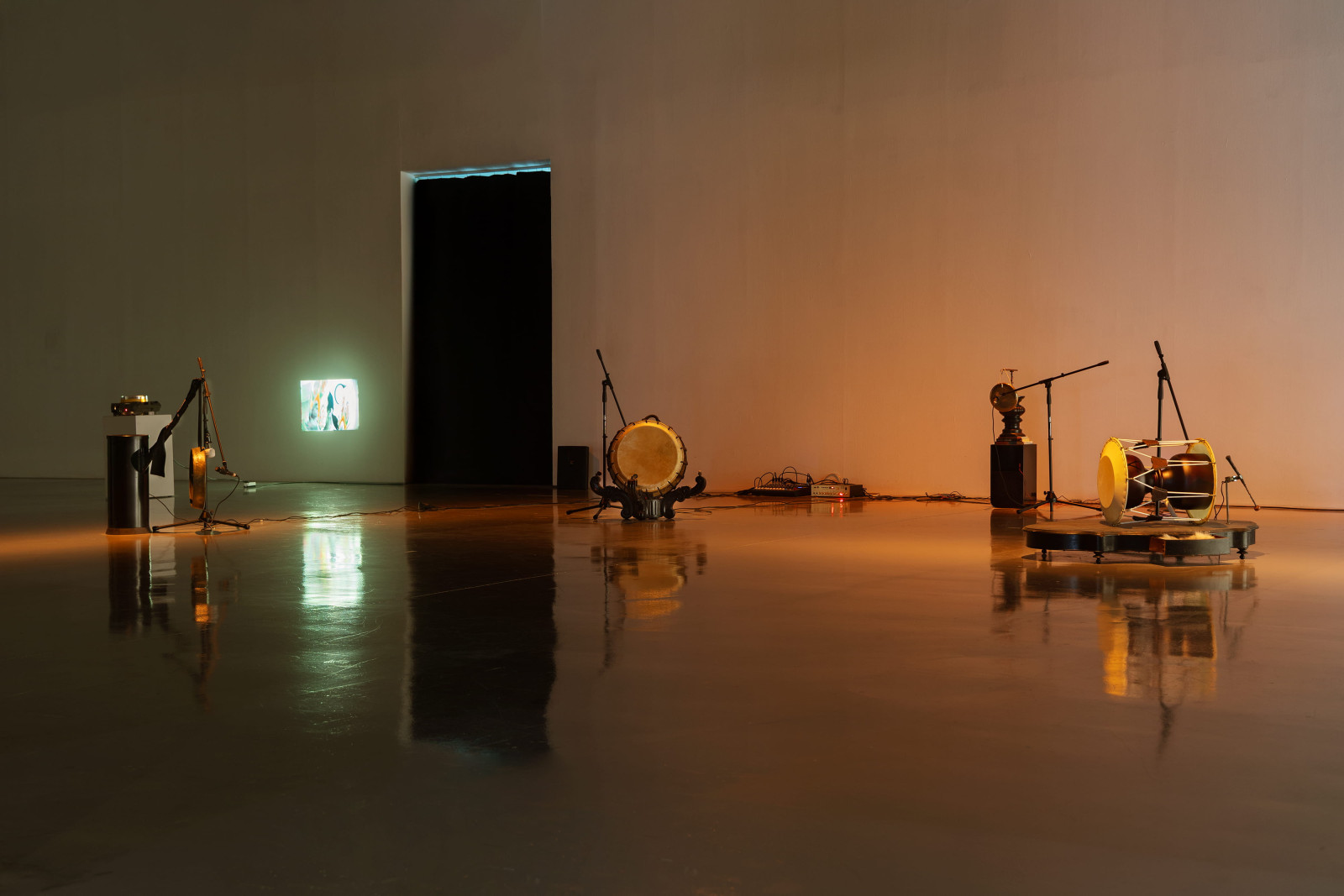
Mira M. Yang’s four kinetic sculptures reimagine samulnori, the Korean percussion tradition that grew from pungmul, a rural folk practice deeply rooted in agricultural labor and communal life. Its four instruments—the kkwaenggwari, jing, janggu, and buk—symbolize lightning, wind, rain, and clouds, connecting music with shamanic traditions. Mann reconstructs each instrument from everyday objects and sets them in motion with electric motors. Together, they become an uncanny mechanical orchestra that hums, pulses, and rattles autonomously.
Beyond performance, the pungmul tradition also carries a history of collective resistance. During Korea’s pro-democracy movements of the 1980s, its instruments became tools of political dissent. Mann’s sculptures preserve this legacy within their borrowed forms, transforming the instruments into a surreal orchestra where these tools of invocation, dissidence and collective ritual play out an automated, absurdist concert of their own.
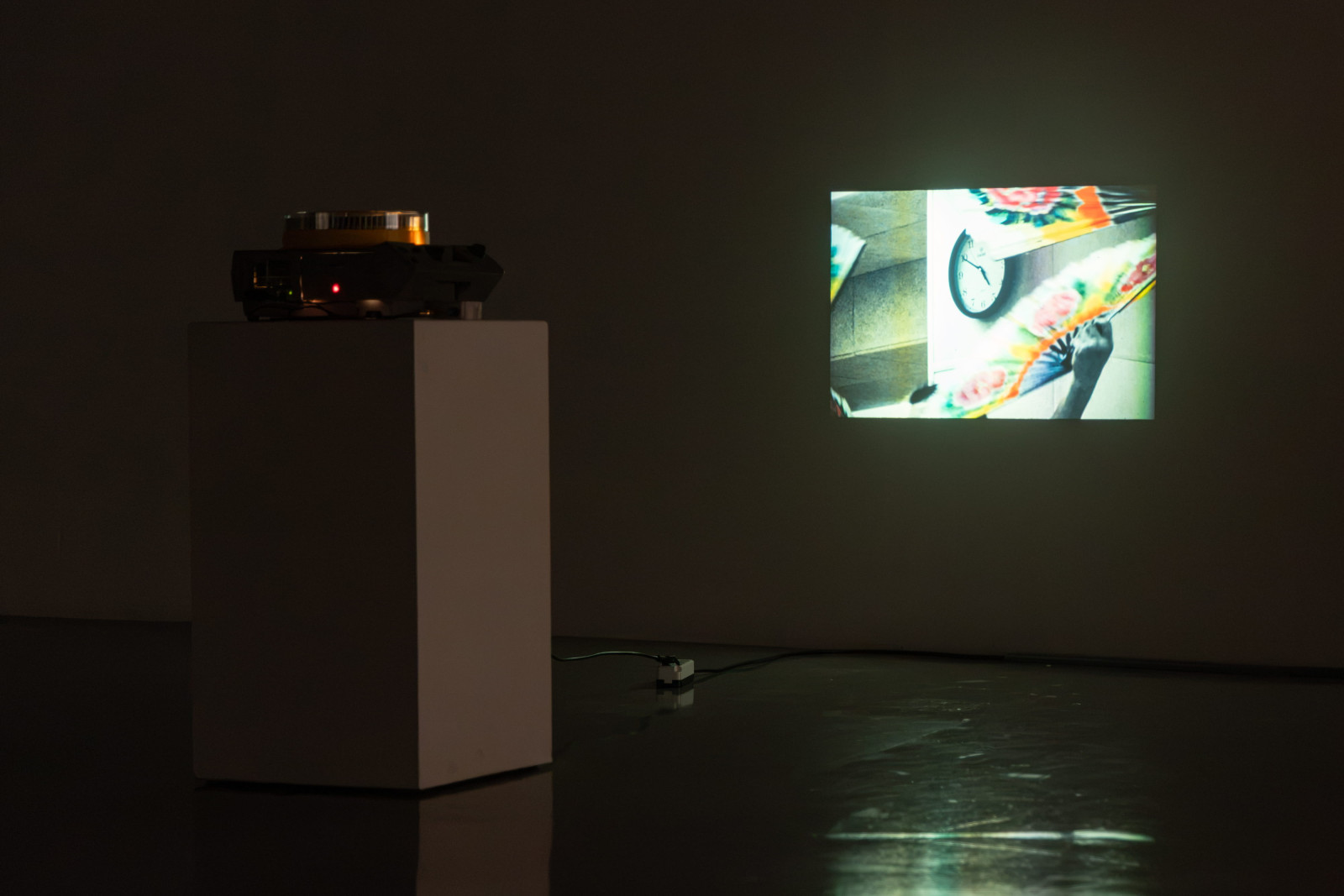
In Poison Fan, a slide carousel projects fragmented images of a rehearsal of buchaechum, the neo-traditional Korean fan dance. Its mechanical rhythm breaks the fluid choreography into a sequence of still frames. The fan itself carries a double history—as both an elegant cultural object and a concealed weapon. Through this juxtaposition, Mann explores how ordinary objects can simultaneously perform belonging and resistance, functioning as signifiers of identity.