A SCORE IN THREE MOVEMENTS
Dissident Chorus unfolds across three venues that together compose a polyphonic score, each site tuning into a distinct frequency in the city's larger resonance. Across Busan Museum of Contemporary Art, Space OneZ, and the Former Busan Nam High School, the exhibition reverberates as a composition of stories, memories, histories, incantations and celebrations of dissent.
These spaces become sites of active transmission: broadcasting, receiving and amplifying research into protests, democracy movements, labour rights, shamanic invocations, ancestral sonic heritages, nature’s auditory ecosystems and the political urgency of nightlife transgressions. Located at Eulsukdo Island and Yeongdo Island, the sea’s sound waves weave into our chorus in three acts. The ocean’s presence reminds us of a state of being that is in constant flux, refuses to be silenced, and has the capacity to carry countercurrents of memory, resistance, and renewal.
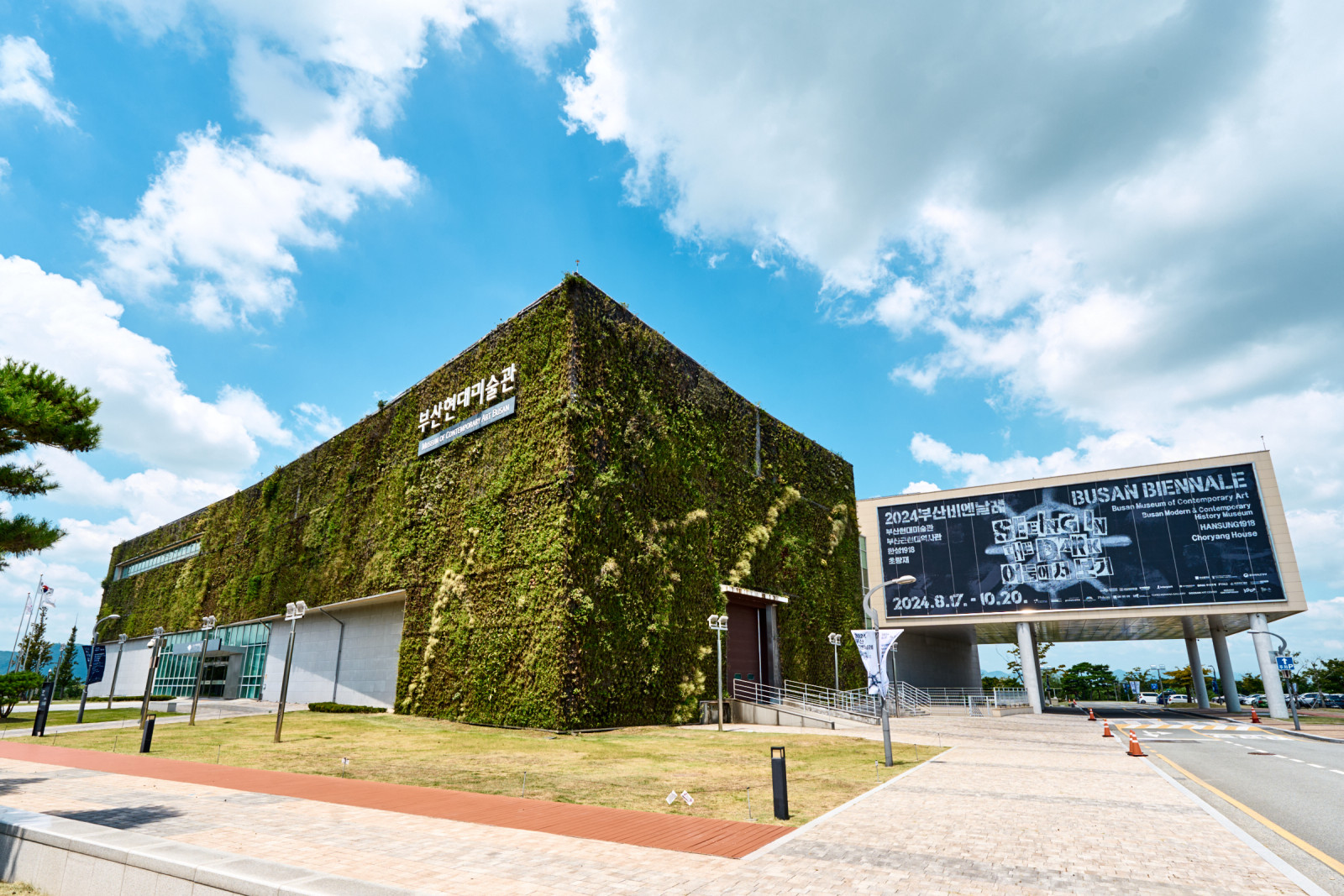
MOVEMENT I: Busan Museum of Contemporary Art
Where river meets sea and migration routes for birds converge, Busan MoCA, with its monumental spaces, forms a shelter where artists can speculate alternate worlds and universes into being. Mirroring the surrounding natural reserve as a protected ecosystem facilitating restoration, the artistic projects gathered here likewise emerge from practices of care, regeneration, and worldbuilding.
The exhibition’s premise aligns with its wetland context as a landscape shaped by cycles of healing and return: what has been damaged still carries memory, and can still become a space of gathering. How do we build worlds from a chorus that holds both damage and repair, both what has been erased and what might still be called into existence? Here, voices find resonance: choirs that traverse species or speak to power, protest songs, echoes and stories that move across generations and galaxies.
Maps and archives transform into new forms of storytelling, notation and invocation; scores emerge not only as musical instruction but as visual diaries, as horizon lines, as systems for documenting what cannot be spoken but must be remembered or called in. These notations become their own language of care, marking routes of migration, charting acts of resistance, holding space for the polyphonic chorus of wayfinding, survival and return.
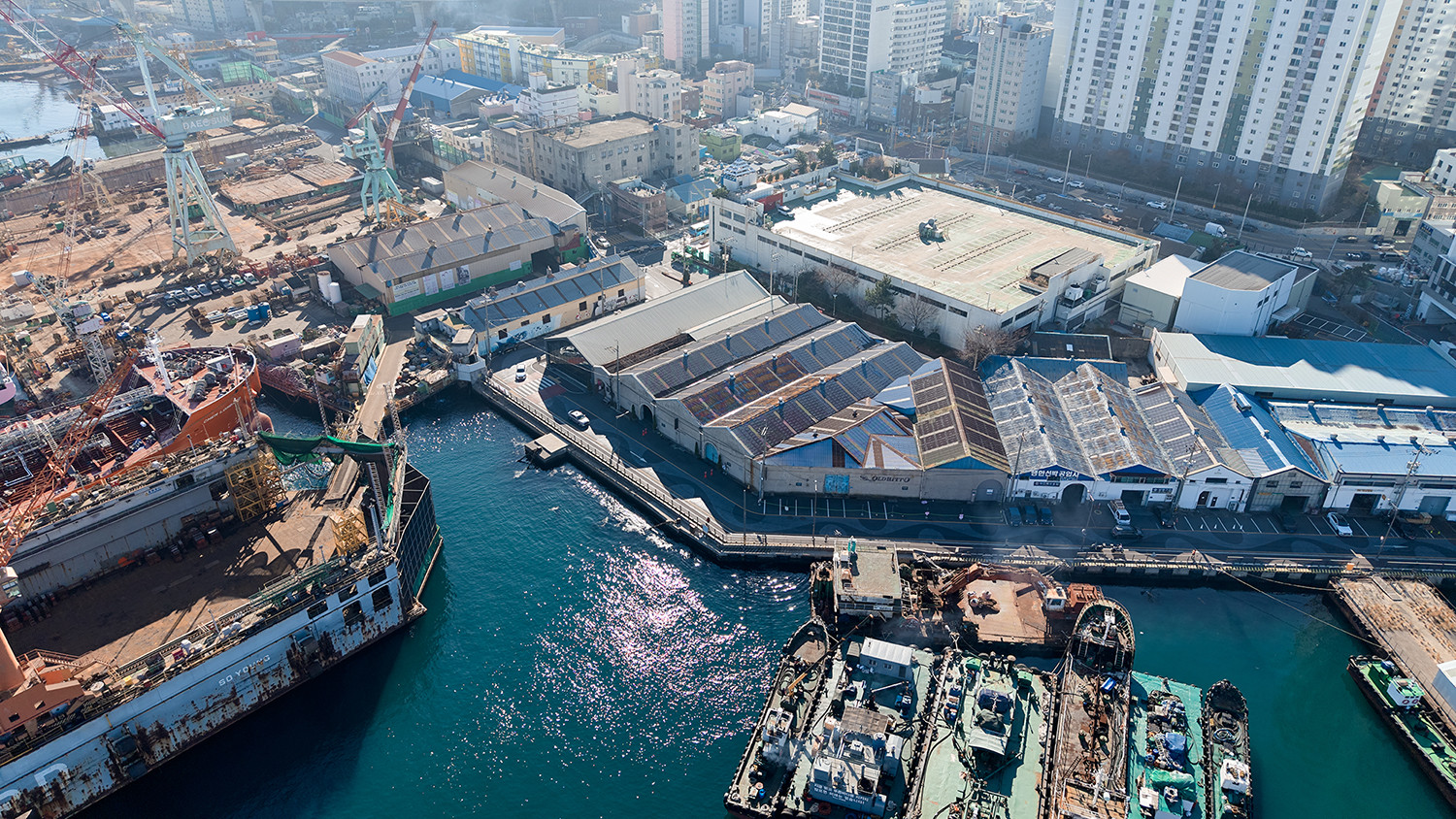
MOVEMENT II: Space OneZ
Salt air. Rust. Wind off the water. Space OneZ drops into the bass register, tuning into the lower frequencies of hidden aquatic life. The century-old marine warehouse originally used to lease ship equipment in Bongnae-dong, still captures the port history of Busan’s historic downtown area. Its eroded walls bear the traces of circulating cargo and labouring bodies. Nearby linger the afterlives of colonial-era hierarchies that divided pleasure quarters by rank and ethnicity, as well as sites where women were confined before deployment across the Pacific. Like many ports in an acceleratingly globalised and connected world, Busan holds histories of exchange inseparable from histories of violence.
For Dissident Chorus, the venue is dedicated to artistic practices who speak to the oceanic and the elemental, connecting human with non-human struggles of survival and resistance. An invocation of aquatic myths and water spirits, of labour chants and protest songs.
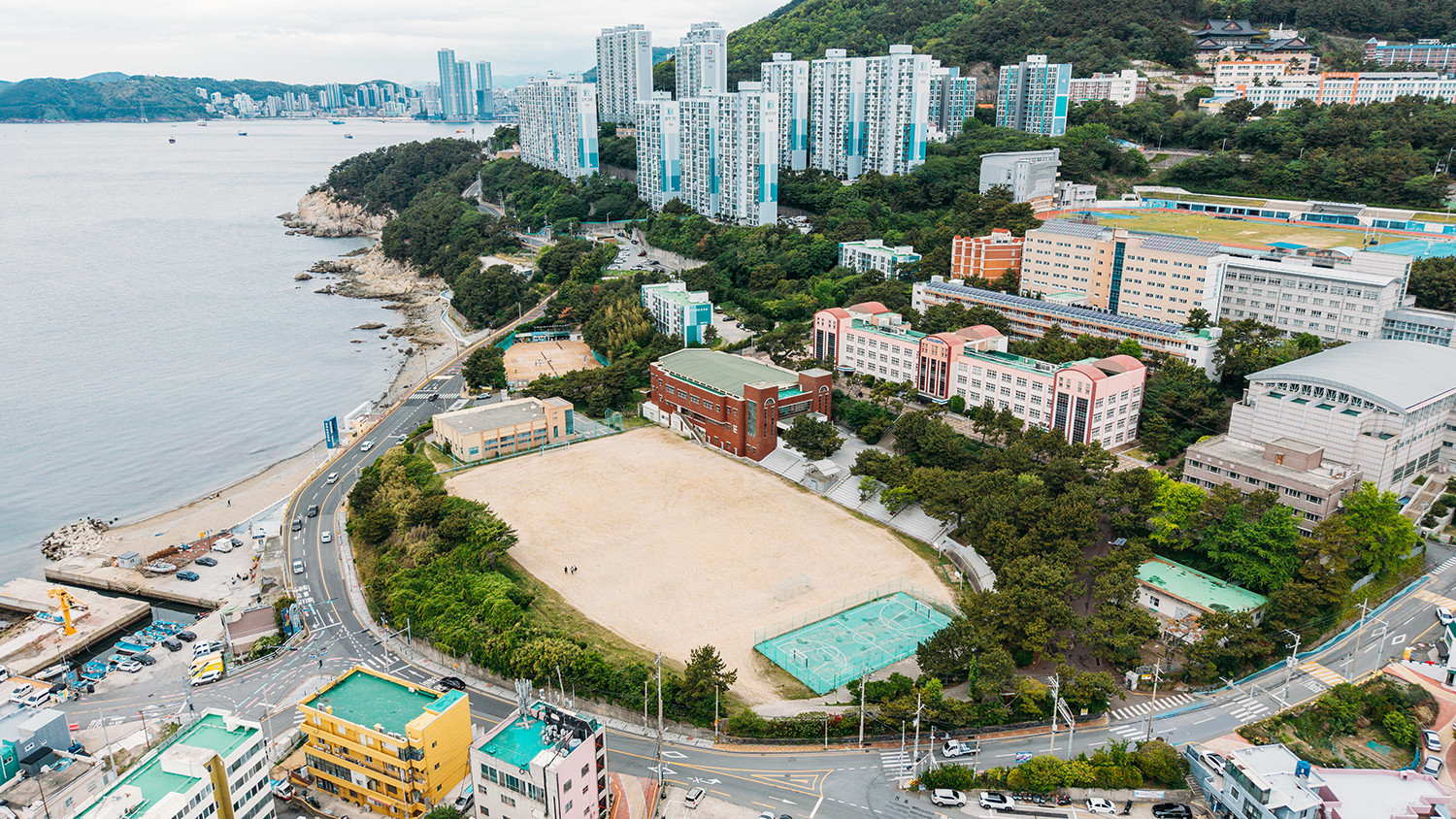
MOVEMENT III: Former Busan Nam High School
Silence, but seventy years of voices linger in its hallways. Former Busan Nam High School, vacated early 2026, overlooking the Pacific from Yeongdo's southern tip, collects installations questioning how and from whom we learn. Empty classrooms speak of Korea's demographic crisis, futures foreclosed. The school becomes the rehearsal movement, dissidence as pedagogy itself.
Here, artworks occupy the infrastructure of institutional education to ask: What knowledge escapes official curriculum? What songs were sung in secret? What organising happened after hours? Who has access to knowledge and who passes it on? The exhibition transforms empty rooms into sites for bottom-up knowledge transmission, excavating oral histories, archival research, censored material and protection spells for generations to come. Aligning body and mind, it challenges teleological approaches to growth and singular truths to make way for vulnerability, plurality, and learning through unlearning.
Black pines and camellias outside frame the building as threshold, endings and beginnings blurring. This venue holds space for pedagogies of dissent and futures still forming, treating silence not as absence but as fertile pause, a gathering place for voices yet unheard. The rehearsal for other ways of being together.