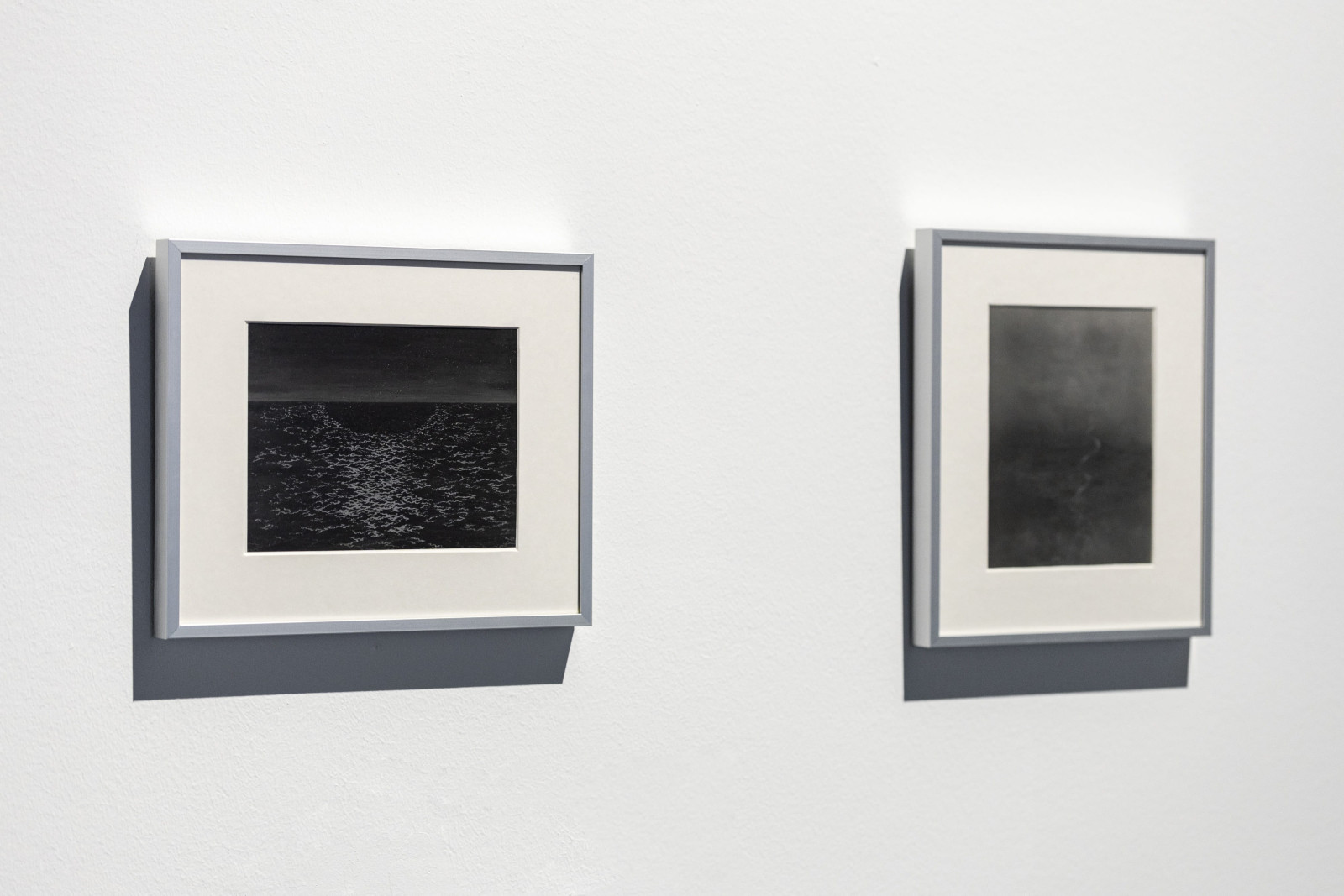
(Right) River in an ocean: 7, 1993, mixed media on photographic paper, 18.3 × 14.1 cm. Courtesy of the Estate of Lala Rukh and Grey Noise.
Lala Rukh



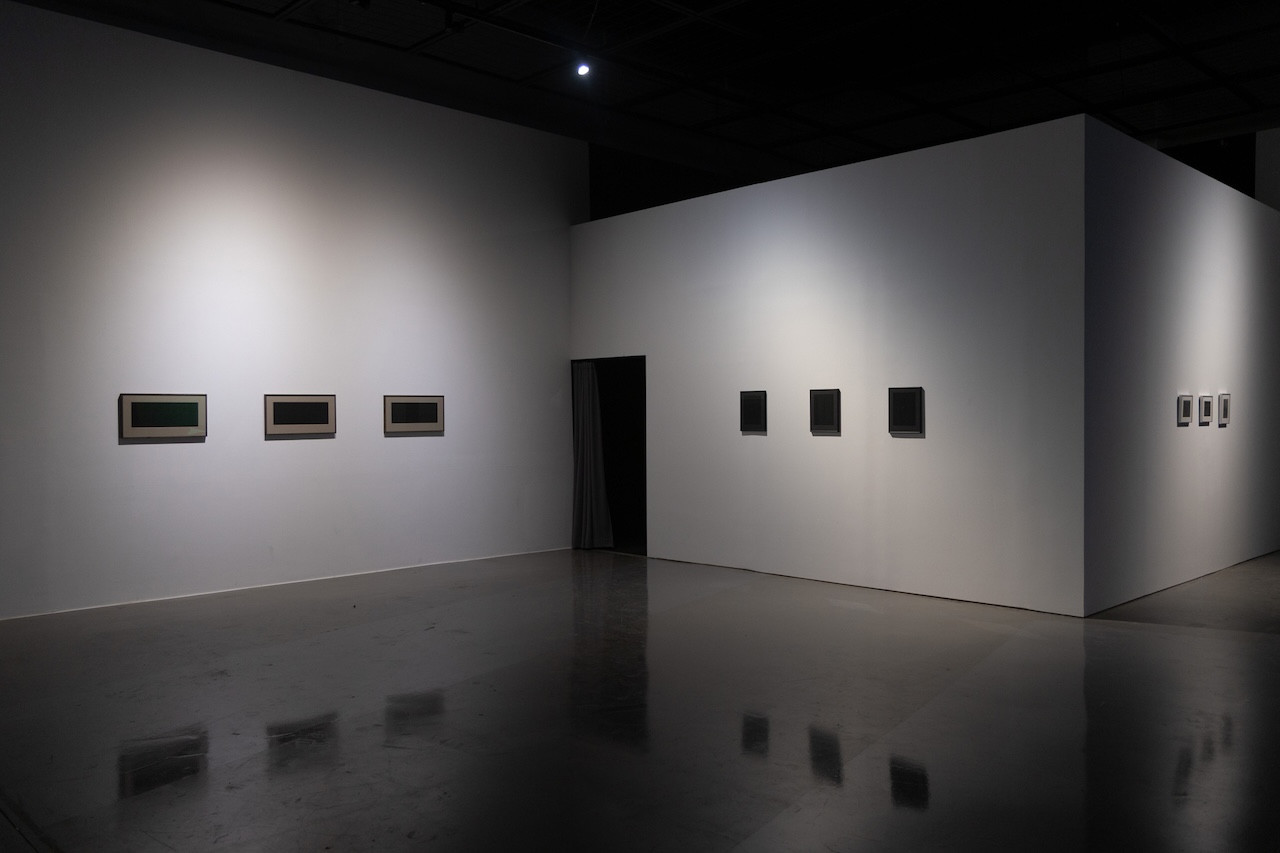
For Lala Rukh, the late artist from Lahore, Pakistan, music was not simply a subject but the underlying structure of her practice. Introduced to Hindustani classical music through her father, she sought to translate its rhythms and beats into a visual language. The three bodies of work presented in this biennale trace the visual language she developed throughout her life.
Presented in a darkened room, Rupak visualizes a tabla solo composed by the artist herself, based on rupak taal, a seven-beat rhythmic cycle in Hindustani classical music. Over the course of two months, Lala Rukh marked dots on a grid to transcribe the rhythm onto paper. The resulting 88 drawings were scanned and assembled into a stop-motion animation. White dots move rhythmically across the screen in time with the tabla, allowing viewers to experience its cyclical rhythm visually.
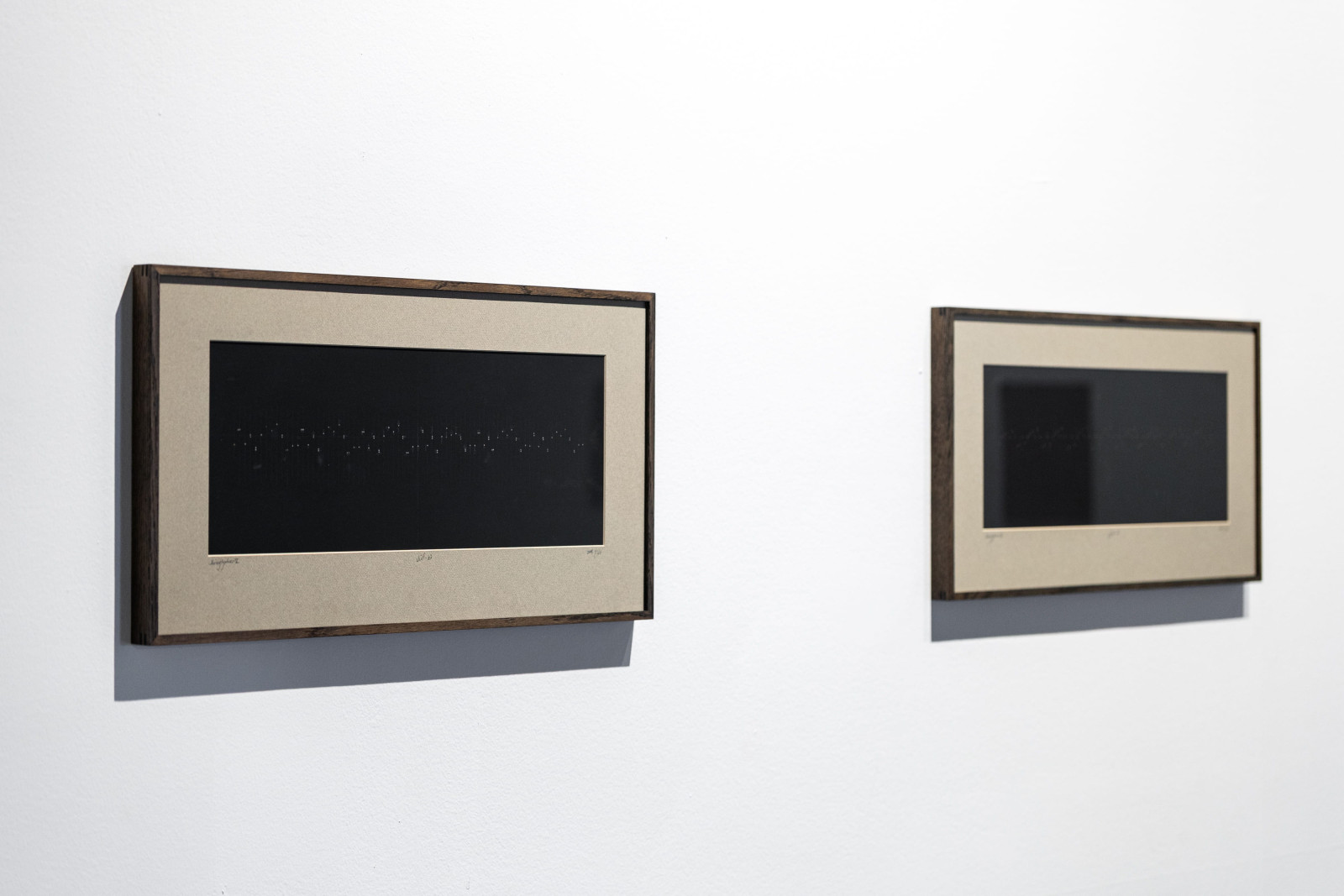
The Hieroglyphics V series fuses Arabic calligraphy and musical rhythm within a single mark. Executed in silver paint on carbon paper, the shimmering marks spread across the black surface like constellations. In turn, River in an Ocean shifts the gaze outward, where the score becomes tidal. Together, these three bodies of work enter into dialogue with Suki Seokyeong Kang's exploration of Jeongganbo, the grid-based notation system of Korean court music, forming part of a “dissident chorus”.