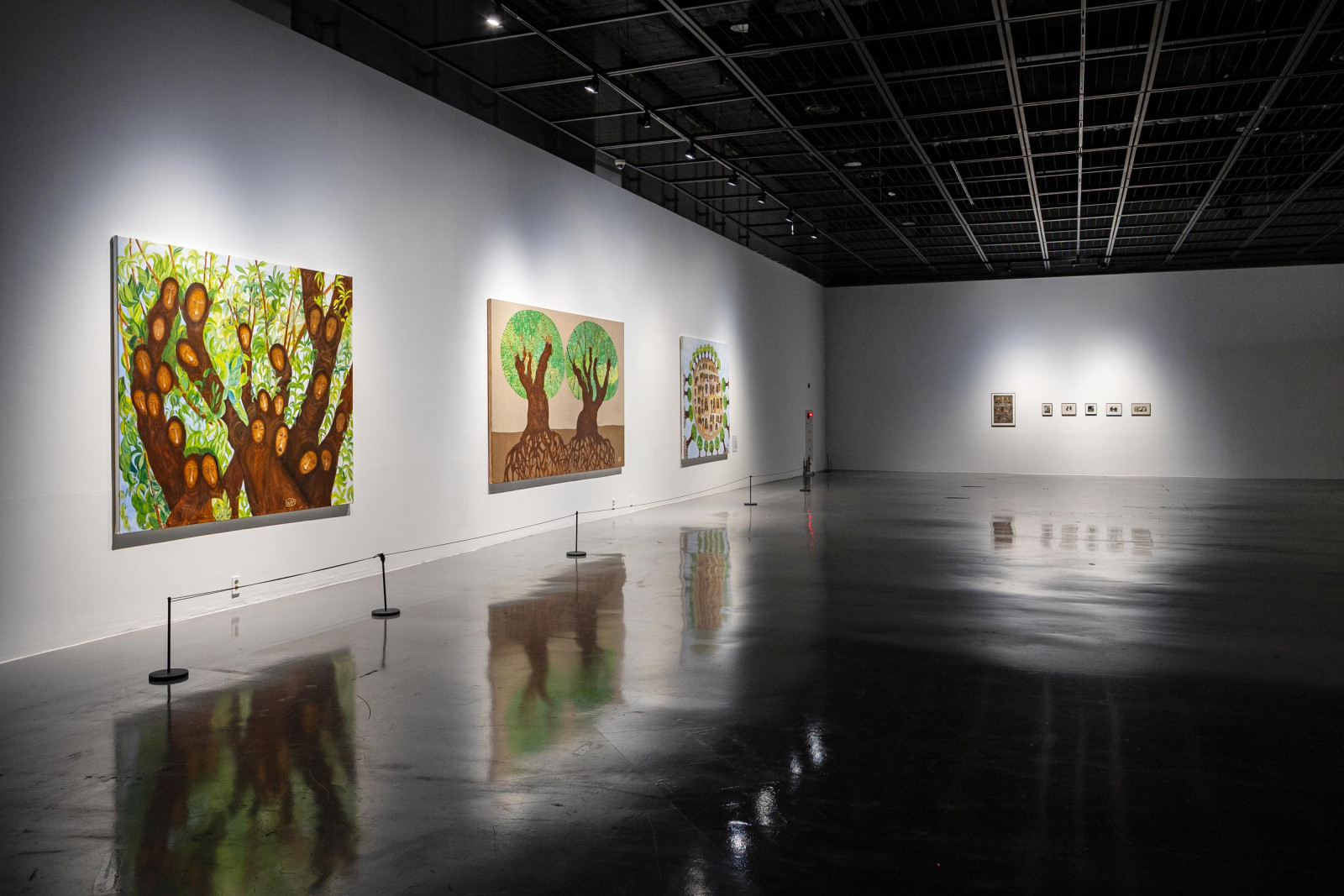
Exhibition view of the Busan Biennale 2026 ©Busan Biennale Organizing Committee. All rights reserved.
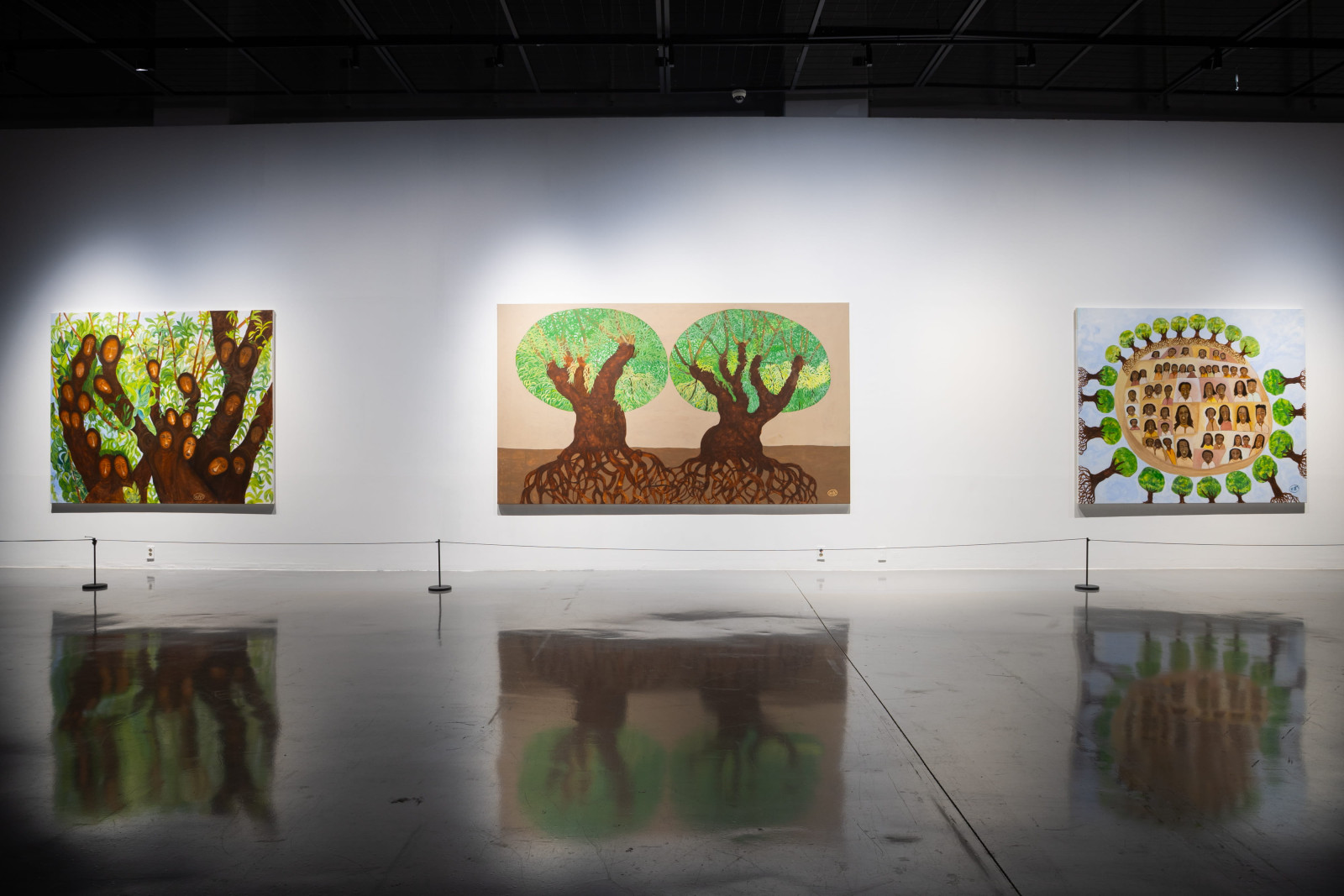
Kamala Ibrahim Ishag, My Two Neems, 2023, oil on canvas, 200 × 350.5 cm. Courtesy of the artist.
(Right) Kamala Ibrahim Ishag, People, 2022, oil on canvas, 197 × 237 cm. Courtesy of the artist.
Exhibition view of the Busan Biennale 2026 ©Busan Biennale Organizing Committee. All rights reserved.
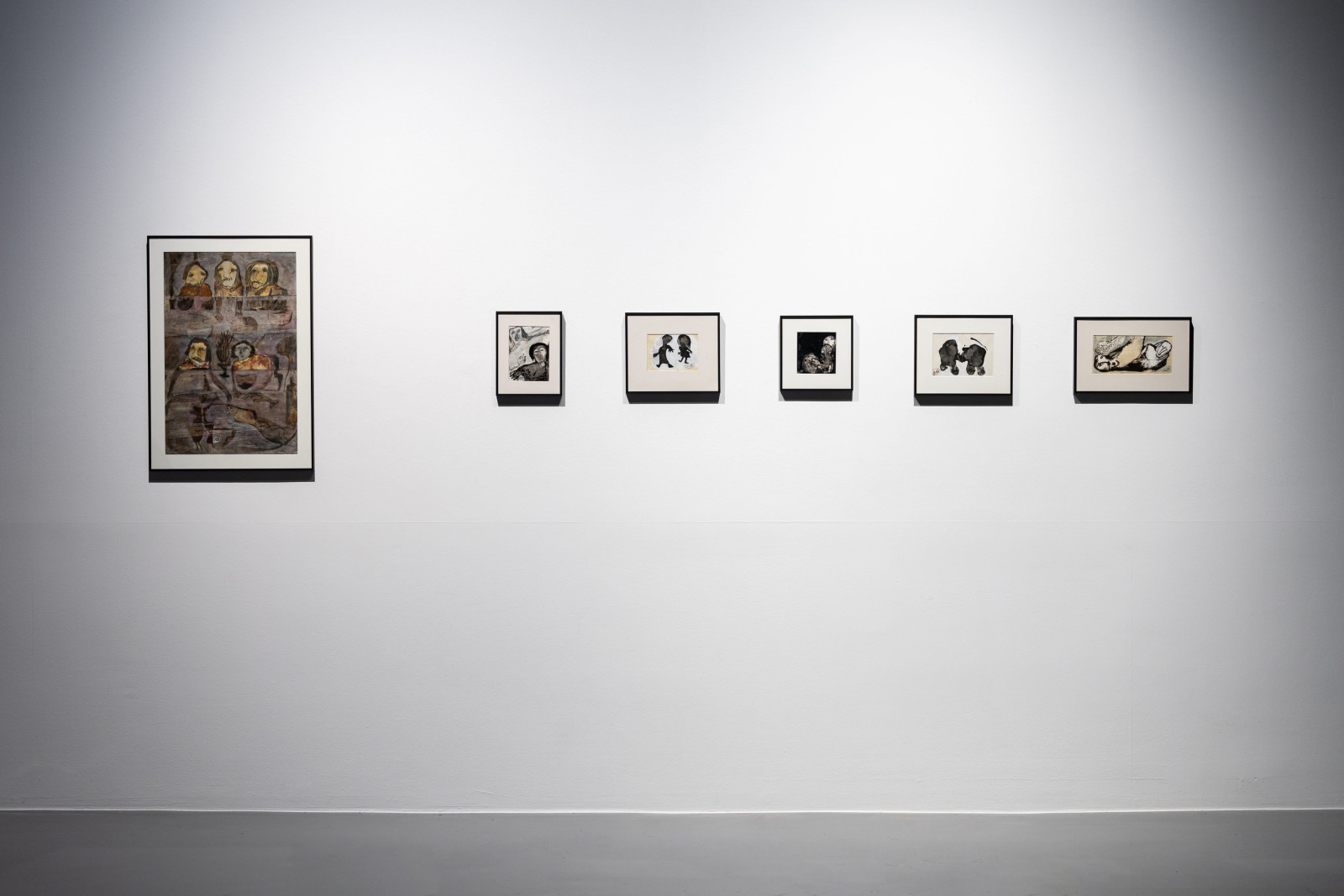
Exhibition view of the Busan Biennale 2026 ©Busan Biennale Organizing Committee. All rights reserved.
Kamala Ibrahim Ishag


Kamala Ibrahim Ishag’s work spans more than five decades, continually questioning where the human body ends and the natural world begins. In her early drawings and paintings, figures appear to hover between solid and fluid states. Their outlines blur, faces overlap, and mouths open in expressions of pain, song, or trance. These images recall zaar, a Sudanese healing ceremony led by women, in which music, movement, and collective participation create a powerful shared release.
This interest in fluid boundaries also shaped the Crystalist manifesto, which Ishag co-authored in 1978. The manifesto called for an open, transparent, and anti-patriarchal art suited to a new way of living. Rather than presenting identity as fixed, Ishag imagines people as constantly changing through their relationships with others, with memory, and with the environment.
In her later oil paintings, this idea expands across large canvases. Trees and plants grow from the heads and bodies of her figures. Arms and legs twist into roots and trunks, while faces emerge among leaves and branches. Ishag builds these images through many transparent layers of paint, repeatedly revising the composition until the original starting point almost disappears. In these works, women, spirits, trees, and land become inseparable. The body no longer stands apart from nature, but becomes part of a living world that continues to move, speak, and remember beyond the limits of ordinary language.