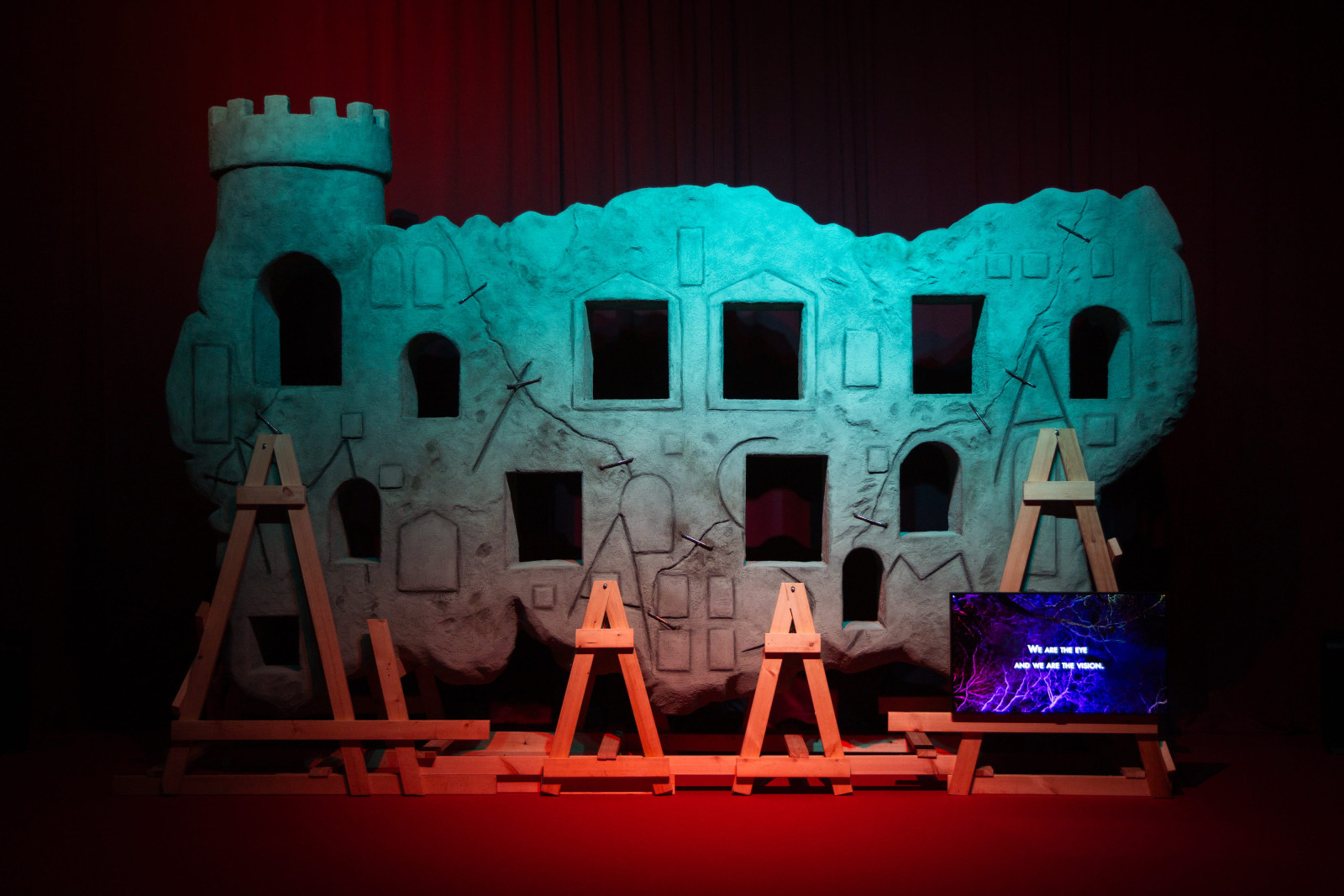
Tai Shani, M.I.A.S.M.A, 2026, fourteen-channel sound installation; polystyrene, acrylic putty, concrete, wood, steel, paint, speakers. 300 × 75 × 500 cm. Co-commissioned by Busan Biennale Organizing Committee; Kunsthalle Bern; Jupiter Artland; and Groninger Museum, 2026.
Tai Shani



Tai Shani’s M.I.A.S.M.A. is a sculptural and sound installation that brings the ancient Greek tragedy Antigone into the present. In the play, Antigone defies the state in order to bury her brother, whose burial has been forbidden. Her choice creates an impossible conflict between political authority, moral duty, and the right to mourn.
Shani approaches this conflict through the idea of necropolitics, which asks how power determines who is allowed to live and who is exposed to death. Some people find their movements restricted, are more easily exposed to death, and are denied equal opportunities to mourn and be remembered. The work asks urgent questions: Whose lives are treated as valuable? Whose deaths are publicly grieved? And whose histories are allowed to remain?
On the second floor of Busan Museum of Contemporary Art, a monumental wall structure resounds with a twelve-part choir. The chorus weaves loss, kinship, hunger strikes, Frankenstein, mass annihilation, bees, and death zones into a single polyphonic work. The overlapping voices turn the museum floor into a ritual space and a site of resistance. In an age shaped by the climate crisis, genocide, and the inequalities produced by neoliberalism, Antigone is no longer simply an ancient tragedy. It becomes an urgent call to remember the forgotten deaths, to mourn them together, and to stand in solidarity with those whose voices have been silenced.