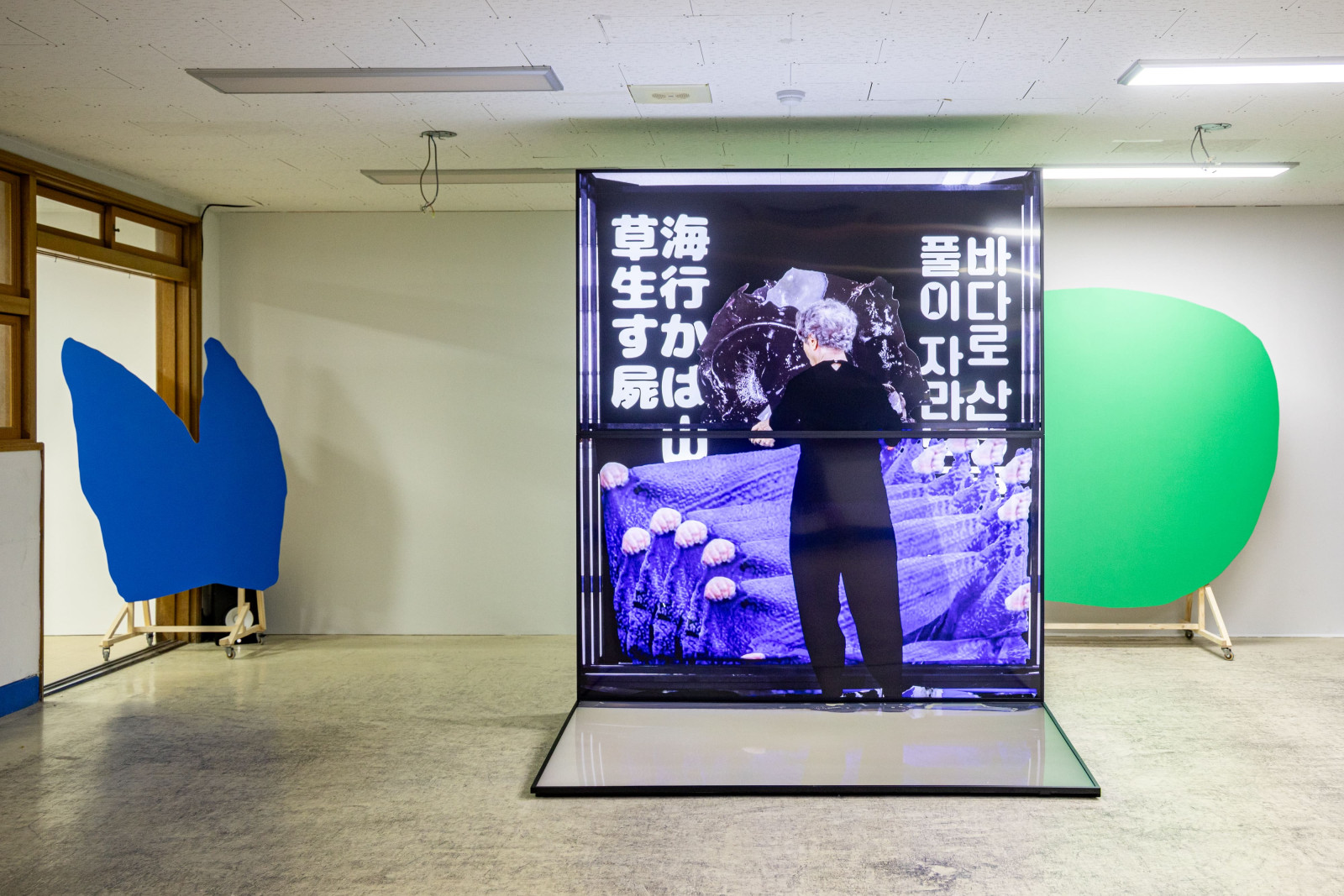
Heaven Baek, Grass-Grown Corpse Over the Sea and the Mountains, 2026, multimedia six-channel video installation, color, sound; film set, 2 pipes, dimensions variable, 8 min 48 sec. Commissioned by Busan Biennale Organizing Committee, 2026.
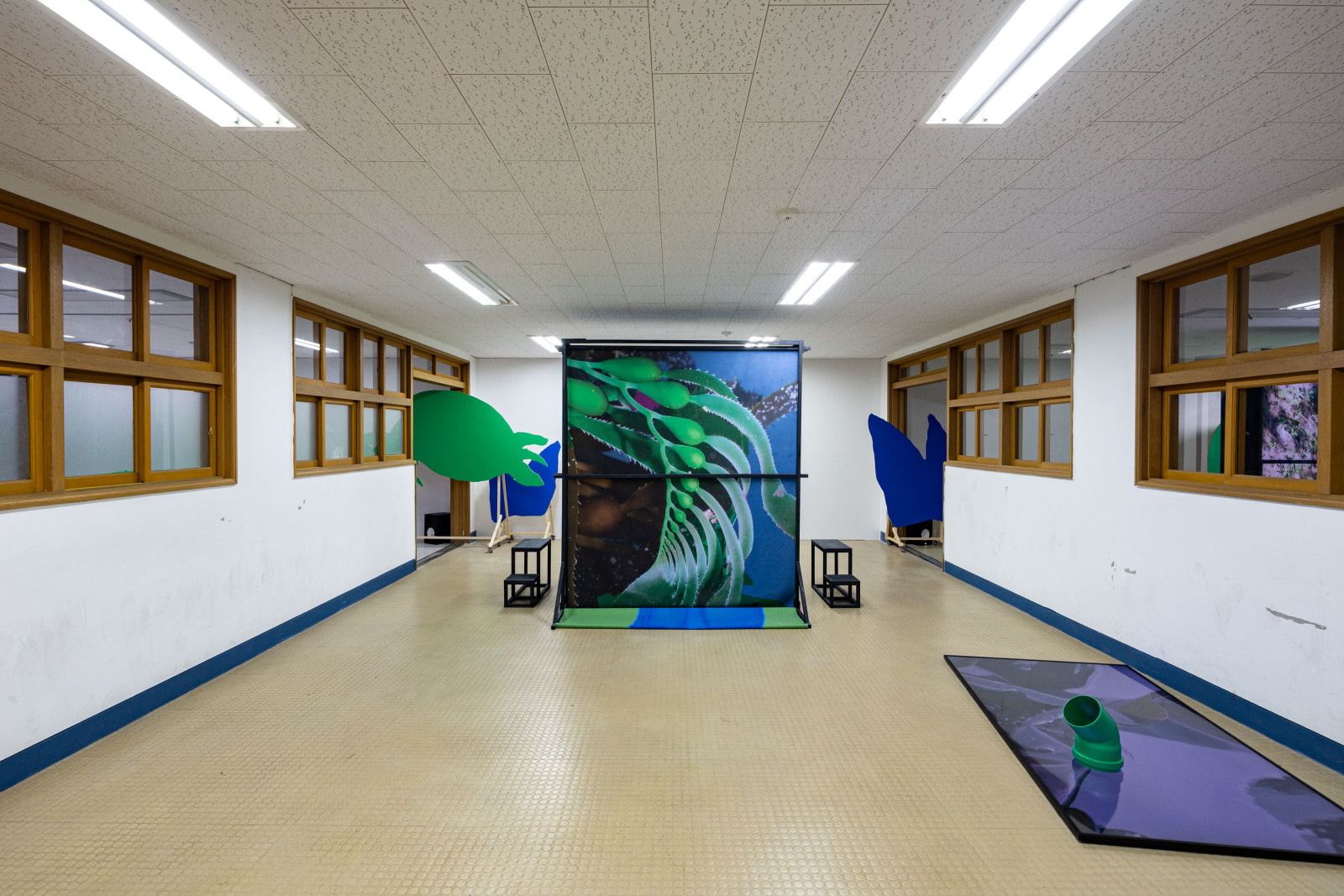
Heaven Baek, Grass-Grown Corpse Over the Sea and the Mountains, 2026, multimedia six-channel video installation, color, sound; film set, 2 pipes, dimensions variable, 8 min 48 sec. Commissioned by Busan Biennale Organizing Committee, 2026.
Heaven Baek




The title, Grass-Grown Corpse Over the Sea and the Mountains, adapts a line from Umi Yukaba, a popular lyric song during Imperial Japan that effectively served as an unofficial second national anthem. The work originates from this song, which was daily recited by primary schoolchildren under the imperialization policy. It builds upon the oral testimonies of the Joseon Women’s Volunteer Labour Corps who were subjected to forced mobilisation. Departing from various regions across Korea, these women passed through Busan, where they underwent compulsory bodily disinfection before being transported onwards. Rather than directly re-enacting an event so deeply embedded in colonial violence, Baek turns her gaze toward the shared experience of waiting, fear, and suspended time. Busan emerges not simply as a historical location, but as an anonymous threshold crossed by countless lives and memories.
Central to the work is Baek's use of green and blue. Green recalls the forests, mountains, and rooftops of Busan as remembered from the artist’s childhood, while blue evokes the sea that has long shaped the city’s collective imagination. Projected as expansive fields of colour, these monochromes do not illustrate history directly. Instead, they become temporal fields in which viewers bring their own memories and associations, suggesting that history is continually completed through individual acts of perception.
The recurring presence of kelp offers a counterpoint to this abstraction. Black, heavy, and saturated with seawater, it carries the weight of both the sea and the labouring body, becoming traces of history that persist despite silence, neglect, or forgetting. Through the interplay of sound, colour, and material, Baek does not treat history as a closed past, but questions how histories of dominance continue to occupy the present.